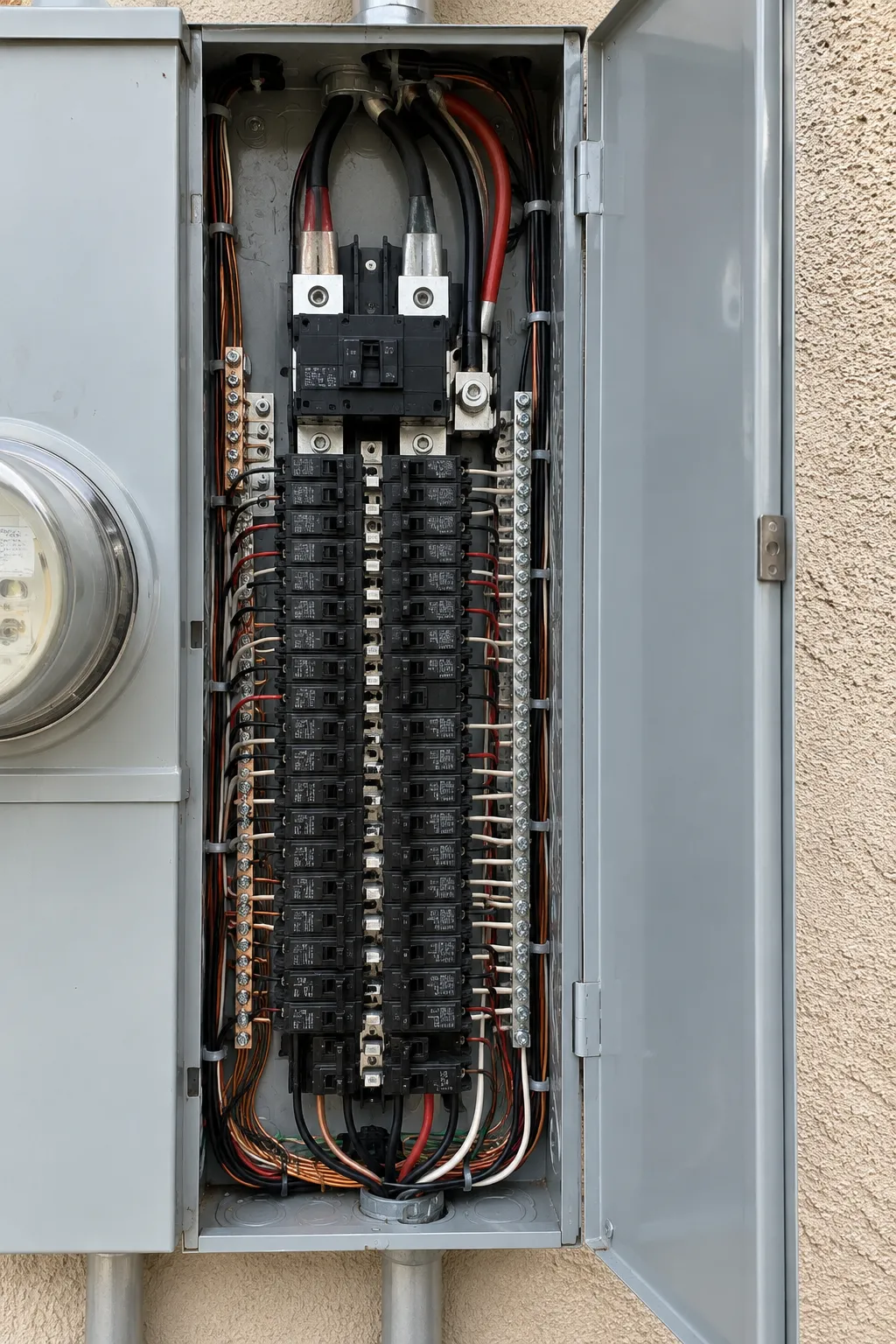
Electrical Panel Replacement
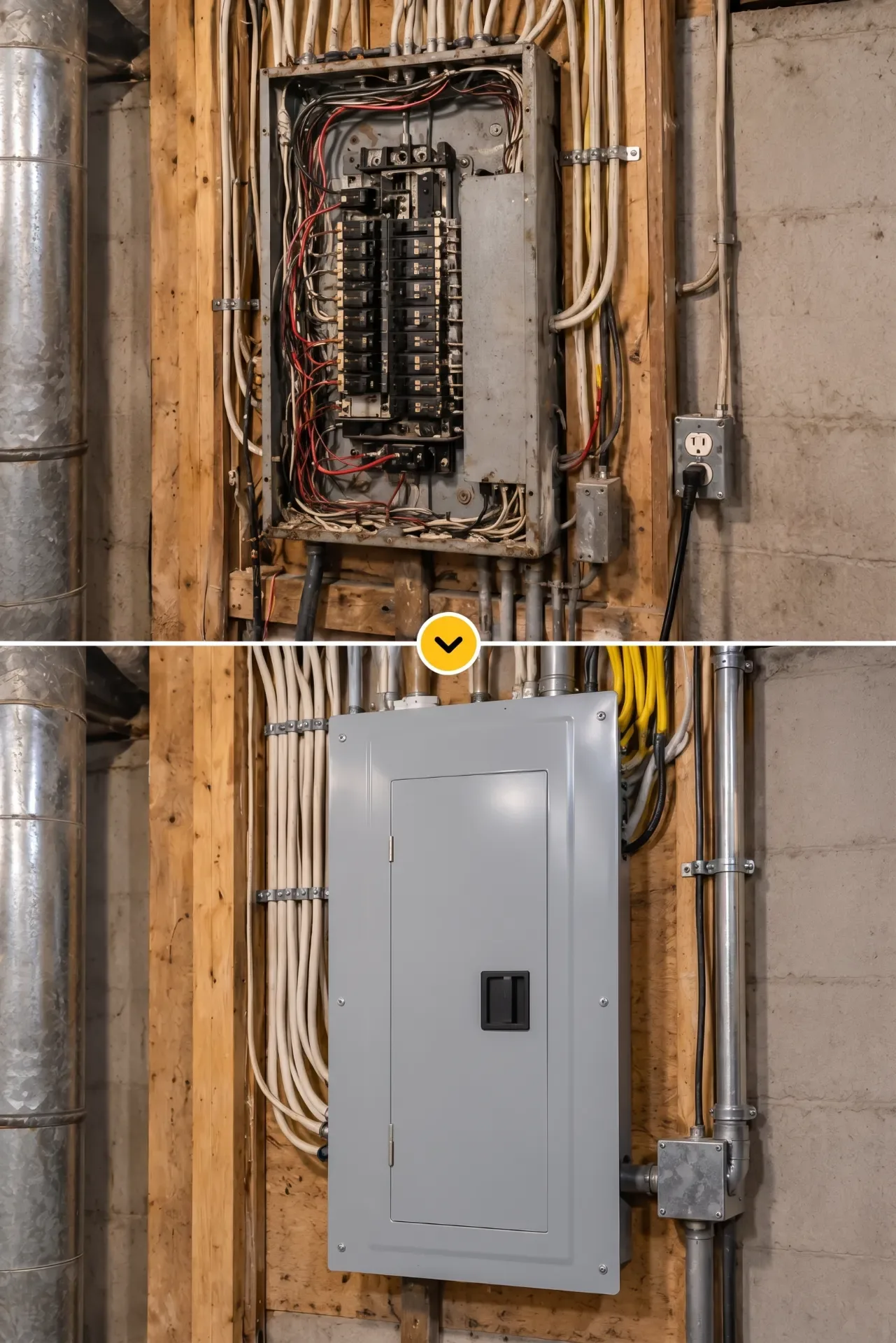
If the home has enough electrical capacity but the existing panel itself needs to be replaced, the new panel may keep the same service size. A breaker panel replacement does not automatically mean moving to 200 amps.
Planning an EV charger, heat pump or renovation — or living with an old panel? We start with a load calculation, give you a fixed price and handle the ESA permit from start to finish.
Not every home needs a larger electrical service. The assessment comes first, so the recommendation is based on your actual electrical load and existing equipment.
Assessment Before Recommendation
We check the existing service and electrical load before recommending a panel upgrade.
Assessment Before Recommendation
We check the existing service and electrical load before recommending a panel upgrade.
Some signs point to a higher electrical load or limited room in the existing service, but none of them confirm that a larger service is automatically required.
A breaker keeps tripping
Repeated tripping can mean the circuit or electrical load needs to be assessed rather than simply reset again.
Lights dim when larger equipment starts
Noticeable dimming can be a reason to look more closely at the existing service and how power is being used in the home.
No room for additional circuits
Limited breaker space can affect how future electrical work is planned, even when the existing service capacity may still be adequate.
Extension cords are doing a circuit's job
Heavy reliance on extension cords can be a sign that the home's electrical layout no longer matches how the space is used.
Renovations are pushing the existing service
New circuits and higher-demand equipment can change the total electrical load and should be reviewed before work is added.
Planned additions can change the home's electrical load, but the right solution depends on the existing service and how much capacity is actually available.
None of these automatically means you need a 200 amp upgrade.
The next step is to calculate the actual electrical load and assess the existing service before deciding whether anything needs to change.
If you've been searching for electrical panel replacement near me, start here: not every home needs a larger electrical service. The right solution depends on the condition of the existing equipment, the available capacity and what you're planning to add.
Assessment First
Load calculation before the recommendation.
Assessment First
Load calculation before the recommendation.
If the home has enough electrical capacity but the existing panel itself needs to be replaced, the new panel may keep the same service size. A breaker panel replacement does not automatically mean moving to 200 amps.
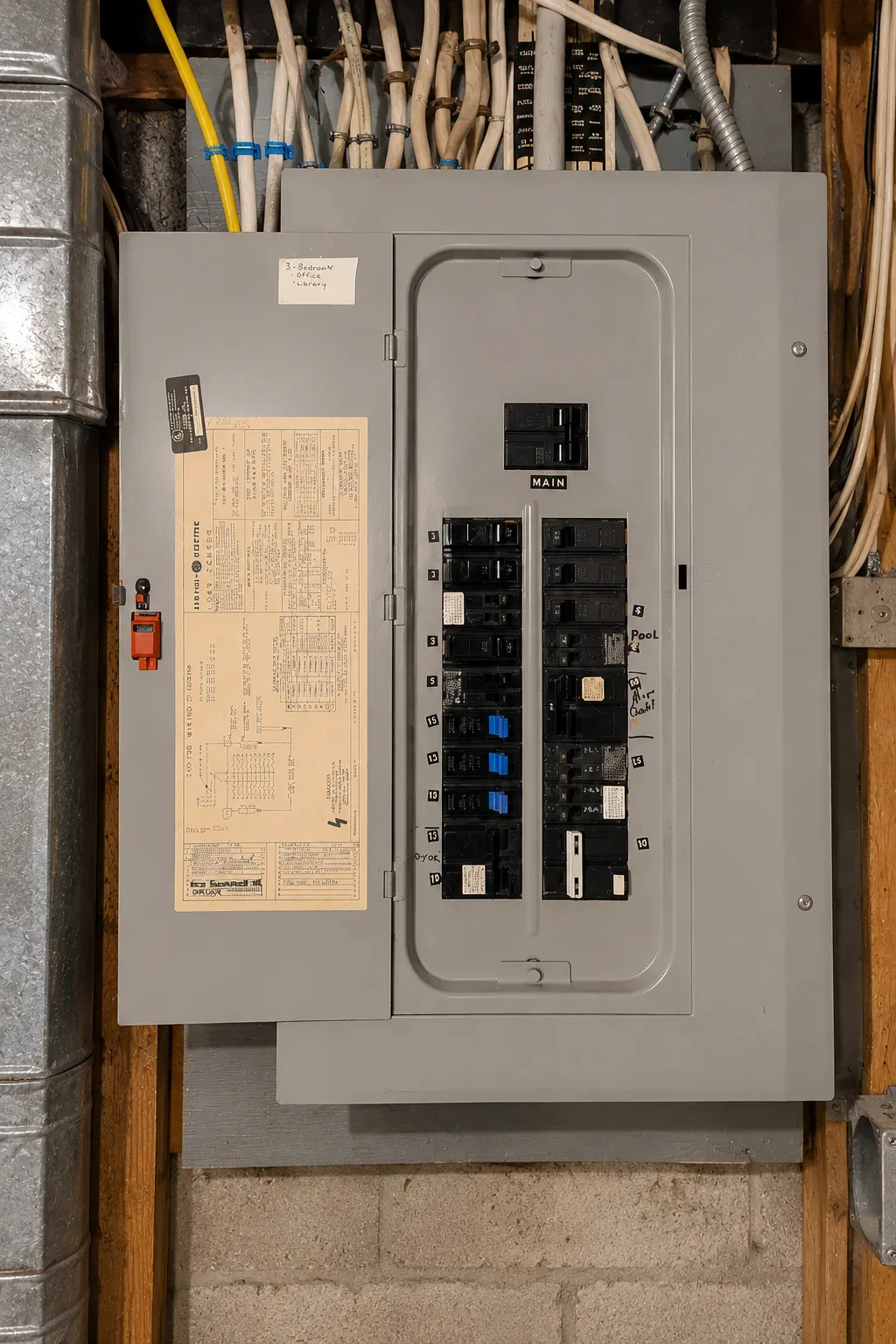
A 200 amp service upgrade makes sense when the electrical load calculation shows that the existing service cannot reasonably support the home's current or planned demand.
We recommend an electrical service upgrade based on the actual load — not simply because 200 amps is the larger option.
A sub panel can be useful when the main service has enough capacity but additional circuit space is needed for a garage, basement, workshop or another part of the property.
Sub panel installation can expand circuit organization without automatically increasing the home's overall service size.
A load-management solution can control when certain high-demand equipment uses power, which may help some homes add new electrical loads without automatically increasing the entire service capacity.
The load calculation decides — not the size of the job.
We assess the existing service first, then explain which option actually fits the home and the electrical demand you're planning for.
If you're looking for a service upgrade electrician Ancaster, the first question is not automatically “Do I need 200 amps?” The existing service, current electrical load and future plans all need to be looked at together.
A 60 amp service is more likely to be found in an older electrical setup and may offer limited capacity for the way a modern household uses electricity.
More common in older homes and older service configurations.
May be associated with a fuse box, pony panel or other older electrical equipment.
Available capacity should be assessed before adding significant new electrical loads.
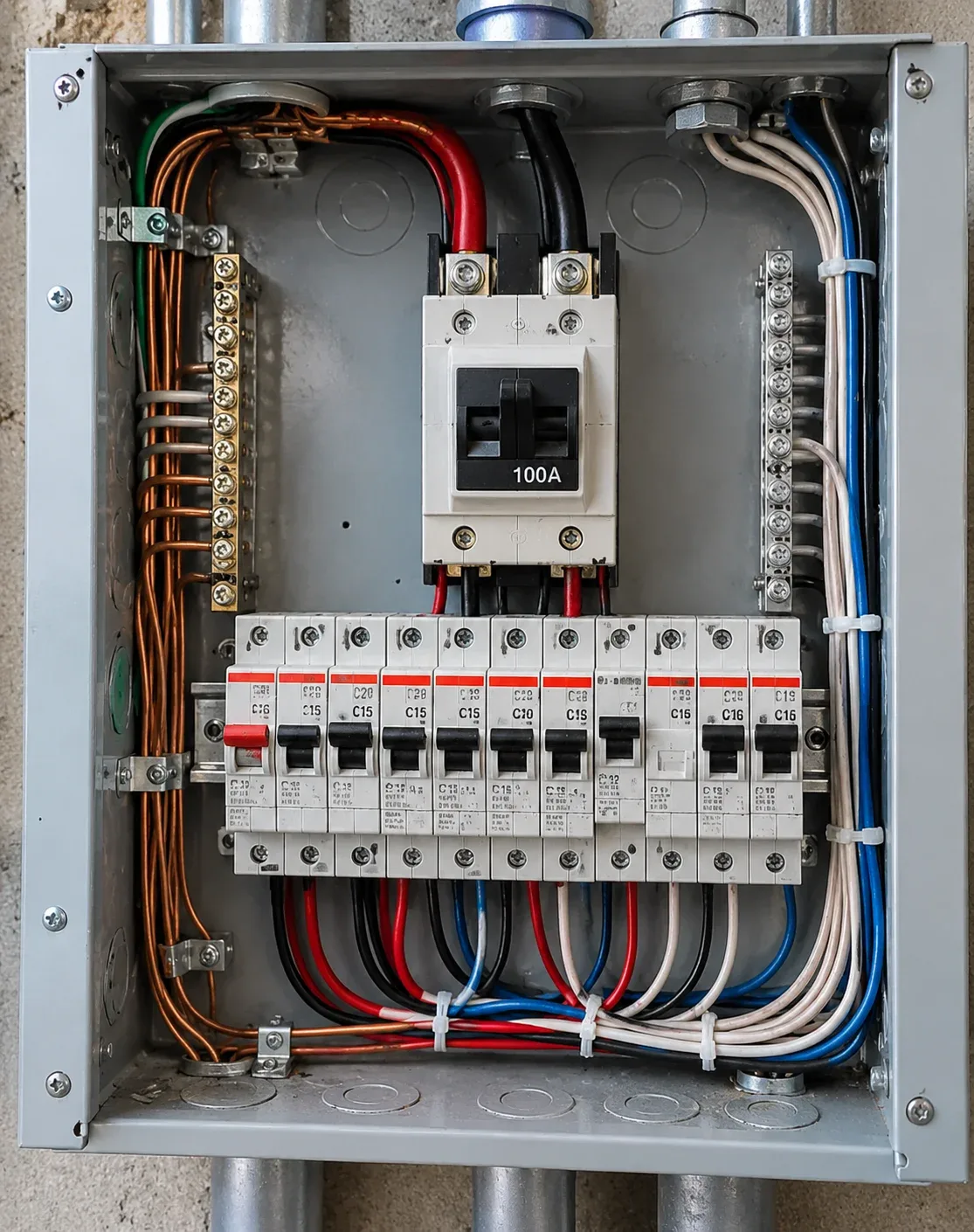
A 100 amp service is still common in residential properties and may be completely adequate when the home's actual electrical load remains within the available capacity.
A 100 amp panel is not automatically too small simply because a larger service exists.
Existing household demand and planned additions matter more than the number alone.
A load calculation helps determine whether the existing 100 amp service can remain.
A 200 amp service provides more available electrical capacity and may make sense when a home is adding several higher-demand electrical loads.
A 200 amp panel can provide more room for future electrical demand.
A 200 amp service upgrade should be based on calculated need, not simply on the fact that 200 amps is a newer or larger option.
The electrician should compare the home's current demand and planned additions before recommending the change.
The main service rating may be visible at the main disconnect or on equipment labels, but you don't need to determine it yourself. The electrician can confirm the existing service during the on-site assessment.
Older electrical equipment does not automatically mean the entire service needs to be replaced. The first step is identifying what is installed, reviewing its condition and understanding why it may have been flagged.
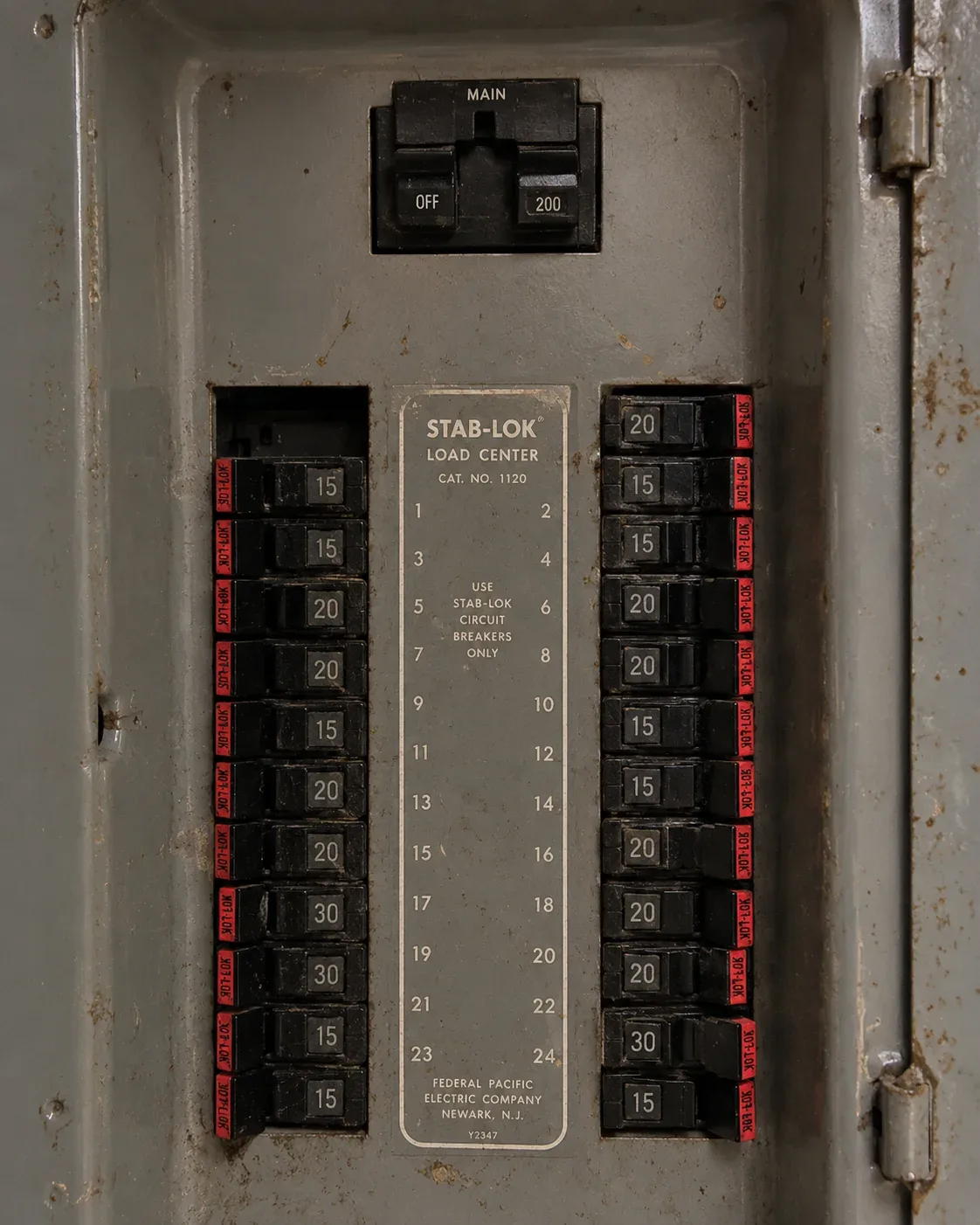
Federal Pioneer Stab-Lok panels and Stab-Lok breakers are commonly associated with older Canadian homes. If an inspector or insurer has raised a concern, we can identify the equipment, assess its condition and explain whether replacement or another correction should be considered.
Federal Pacific is the related U.S. name you may also encounter when researching Stab-Lok equipment online.
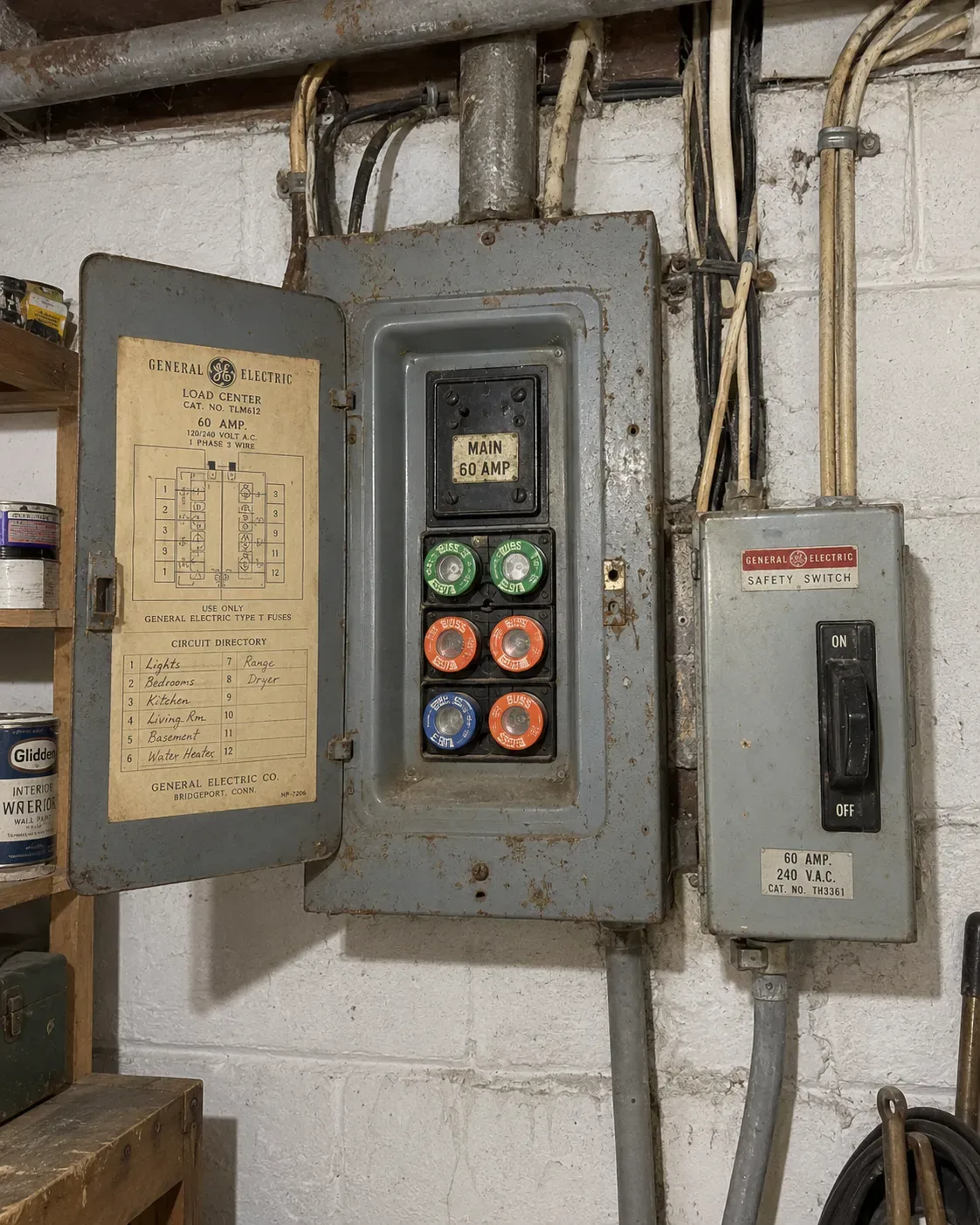
Older properties may still have fuse equipment, a 60 amp service or a pony panel added during previous electrical work. A fuse box replacement or fuse box to breaker panel conversion should be based on the condition of the existing equipment and the home's actual electrical needs.
We assess the existing service first rather than assuming that every older fuse setup needs the same solution.
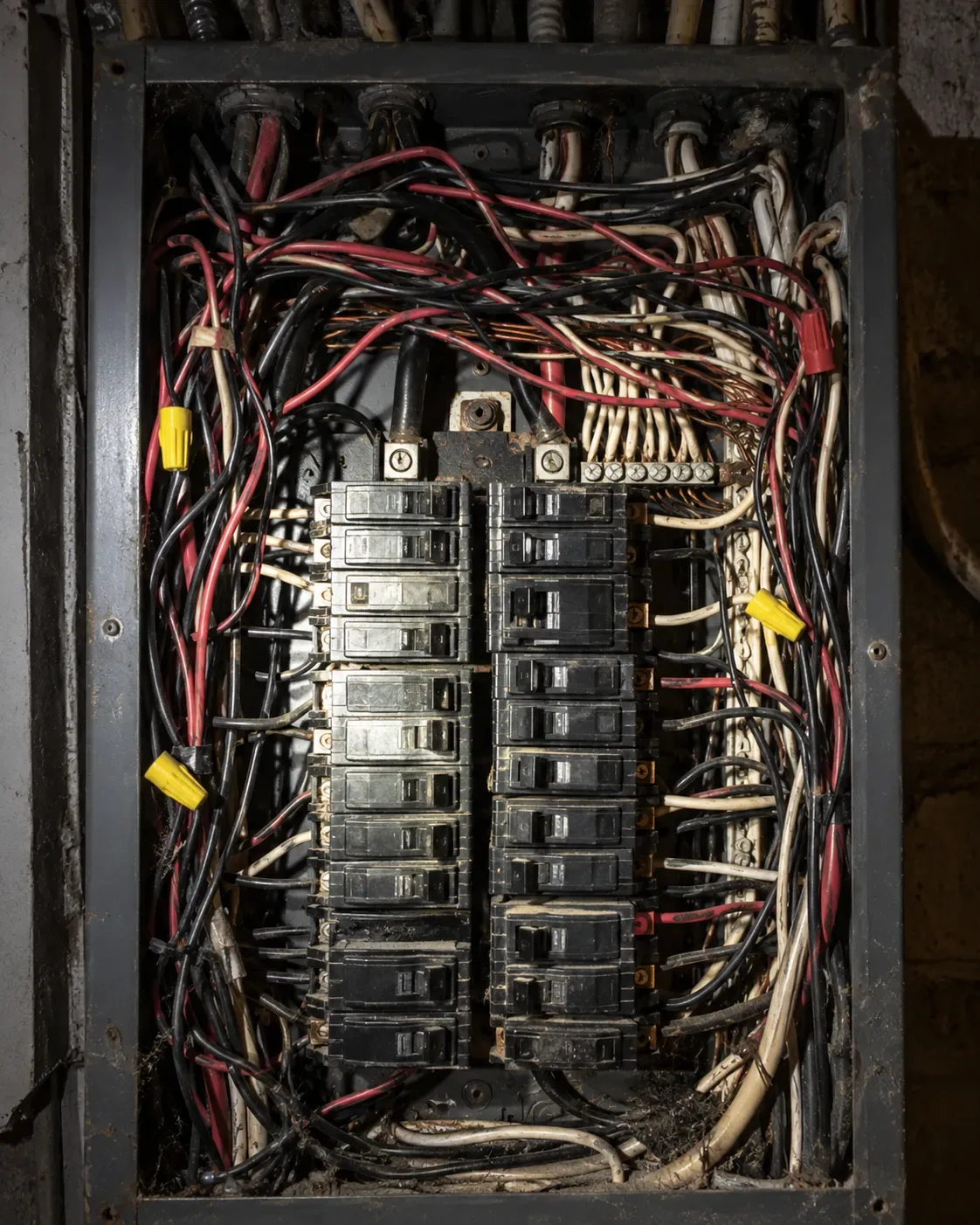
Corrosion, evidence of moisture, overcrowded wiring, double taps or previous alterations can all be reasons to take a closer look at an existing panel. The condition matters more than simply how old the equipment looks.
An assessment helps separate cosmetic age from electrical issues that actually need correction.
We can inspect what is installed, explain what they may be concerned about and determine whether panel replacement or another correction is appropriate. You do not need to know the panel type or diagnose the issue yourself before booking an assessment.
When electrical work requires ESA review and the work is accepted, the applicable ESA Certificate of Acceptance can provide documentation of the completed electrical work.
We assess the existing service first, explain the scope and price, then walk you through any ESA or utility steps that apply to the project.
We review the existing panel, service, planned loads and site conditions, including a load calculation when needed.
The electrician determines the scope on site and gives you the price before you decide whether to approve the work.
Where required, the ESA notification of work — often called an ESA permit — is filed, and any necessary coordination with Alectra Utilities is explained.
The approved work is completed and tested. Where ESA review applies, accepted work receives the applicable ESA Certificate of Acceptance.
Electrical panel upgrade cost depends on the existing service, site conditions and how much of the electrical service actually needs to change.
Your electrician first assesses the existing panel, service and project requirements. Once the scope is clear, you'll receive the price before deciding whether to proceed.
Assessment
Price
You Decide
Existing 60A / 100A service
Overhead or underground service
Meter, mast & cable routing
Replacement vs full service upgrade
Electrical panel replacement cost can differ significantly from a full service upgrade because the scope is different. Online estimates for how much to replace an electrical panel in Canada are useful only as general context.
Examples of the experience homeowners look for when assessing, replacing or upgrading an electrical panel.
We assumed our older panel had to be upgraded to 200 amps, but the electrician did the assessment first and explained that our current service was still suitable. I appreciated that they didn't try to turn it into a bigger job than necessary.
Christopher Hale
We needed more capacity after adding several new electrical loads to the house. The electrician completed a load calculation, explained why a 200 amp service upgrade made sense, and went over the scope before we approved the work. Very straightforward process.
Melissa Grant
Our home inspector pointed out a Federal Pioneer Stab-Lok panel and recommended having an electrician look at it. The electrician explained what we had, why it had been flagged and what our options were without making the situation sound worse than it was.
Jonathan Pierce
We were expecting a full service upgrade, but after looking at the house the electrician recommended replacing the existing panel while keeping the same service size. The explanation was clear and the price was given after the on-site assessment.
Erin Wallace
Our old fuse box had been on our list to deal with for a while. The electrician went through the existing service, explained the difference between replacing the equipment and increasing the service, and helped us understand what actually applied to our home.
Natalie Brooks
We needed additional circuit space for a detached garage, but the existing service still had enough capacity. The electrician suggested a sub panel instead of a full upgrade and explained why it was the more sensible option for the property.
Marcus Ellison
Our insurance company had questions about the electrical panel in the house we were buying. The electrician inspected it, explained the concerns in plain language and outlined the possible corrections. It made the inspection report much easier to understand.
Olivia Hartman
We have a rural property outside the main subdivision areas and weren't sure whether the existing service would support planned work in the workshop. The electrician assessed the load and laid out the options clearly before we made any decision.
Trevor McAllister
Straightforward answers about electrical panel replacement, service capacity, ESA requirements and upgrades in Ancaster.
Ancaster homeowners can perform electrical work in their own home, a single dwelling they own and live in, as long as they file their own notification and the work passes inspection under the applicable ESA notification and inspection requirements. In practice, panel replacement is one of the riskiest DIY jobs. The incoming service conductors stay live unless the utility disconnects them, and the work has to be coordinated with Alectra Utilities. If you hire someone to do the work, they must be a Licensed Electrical Contractor. Hiring an unlicensed installer is illegal in Ancaster and can cause problems with your insurance and when you sell. You can check any contractor's licence on the ESA website before booking.
Yes. Most panel and service upgrade work requires an ESA notification of work, commonly referred to as an ESA permit. When the work is performed by a Licensed Electrical Contractor, the contractor files the applicable notification before the work begins, so you don't have to deal with ESA yourself. A service upgrade has one extra step: ESA inspects the new service and sends a connection authorization to Alectra Utilities, the local utility in Ancaster, so power can be reconnected. Once ESA accepts the work, you receive a Certificate of Acceptance. Keep it with your house documents, since insurers and buyers often ask for it.
Not automatically. It depends on the home's existing electrical load, available capacity and the requirements of the equipment being added. The type of system matters a lot. A heat pump paired with your existing gas furnace as backup (dual-fuel) adds much less load than an all-electric heat pump with electric backup heat, which can draw as much power as several large appliances combined. An electrical load calculation under the Canadian Electrical Code is the right starting point: we add up your existing loads and the new equipment to see whether your current service can support it before deciding whether a service upgrade is necessary. Many homes with 100 amp service can take on a dual-fuel heat pump without an upgrade, while all-electric systems more often need more capacity.
Possibly. Some homes already have enough available capacity for a Level 2 charger. Others may be able to use load management instead of increasing the entire electrical service. A load management device monitors your home's total usage and automatically reduces or pauses charging while other major appliances run, and the Canadian Electrical Code allows this approach for EV chargers. Setting the charger to a lower output, for example 32 amps instead of 48, also works for many households and still fully charges most EVs overnight. We assess the available capacity with a load calculation before recommending a panel or service upgrade, so you only pay for an upgrade when it's needed.
Learn about home EV chargingIt can, but it depends on the property and the buyer. A 200 amp service makes a home better prepared for higher electrical demand from EV charging, heat pumps, hot tubs, a basement suite or a renovated kitchen. Older 60 amp services, and some 100 amp services, are often flagged by home inspectors and can raise questions from insurers, which can complicate a sale. Still, the effect on resale value is hard to predict, so a service upgrade should primarily be based on the home's actual electrical needs rather than an assumed return on investment. If you plan to add several major loads in the next few years, upgrading once is usually simpler than upgrading in stages.
There is no single age that automatically means a panel must be replaced. A well-maintained 30-year-old panel can be in better shape than a damaged 15-year-old one. The decision depends on the condition of the equipment, available capacity, obsolete components, previous alterations, damage, renovation plans and any concerns raised by an insurer or home inspector. Warning signs include breakers that trip often or feel warm, scorch marks, rust or moisture inside the panel, an old fuse panel, no free spaces for new circuits, and DIY alterations such as two wires connected to one breaker. Some older panel models, including certain Federal Pioneer panels, are also commonly flagged by insurers. We inspect the panel and explain whether a repair, a partial update or a full electrical panel replacement makes sense.
Yes. We serve rural parts of Ancaster including Jerseyville, Alberton, Carluke, Sulphur Springs and Southcote / Duff's Corners. Rural properties can have different service layouts than homes in town: an overhead service with the meter on a pole or mast, longer electrical runs to the house, and subpanels feeding detached garages, workshops or barns. Well pumps and shop equipment add load that has to be accounted for, and long runs can cause voltage drop, which affects wire sizing. That's why the existing service and site conditions are assessed on site before recommending an upgrade, so the new service supports the whole property, not just the house.
The price depends on what the job involves. A panel replacement on your existing service costs less than a full 100 to 200 amp service upgrade, which can also include new service conductors, a new meter base and coordination with Alectra Utilities. Other factors include the panel's location and access, the number of circuits to reconnect, ESA permit fees, any outdated wiring found during the work and, for rural properties, the distance to the utility connection. Because these details only become clear on site, we assess the work in person and explain the full price before any work begins.
For most homes, the power is off for part of one day. A panel replacement on the existing service is usually completed within that time, and we restore power the same day wherever possible. A service upgrade can take longer because it involves the utility: Alectra Utilities disconnects power before work starts and reconnects it after ESA authorizes the connection. We schedule these dates in advance and tell you exactly when to expect the outage, so you can plan around work, food in the fridge and anything that needs constant power, such as a sump pump or medical equipment.
Licensed Residential Electrical Work
Serving homeowners throughout Ancaster
Tell Us What's Going On
Start With the Problem. We'll Help With the Next Step.
Whether something is not working properly or you're planning a new installation, tell us what you need help with.
Send us your contact details and we'll follow up about the electrical work you're planning or the problem you've noticed.
Thank You!
Your message has been sent successfully. We'll get back to you shortly.
Prefer to speak with someone?
(289) 802-4514Serving Ancaster
Urban neighbourhoods & rural areas
Looking for an electrician in Ancaster, ON? We serve residential properties throughout the community, including central neighbourhoods and rural areas.
Rural properties may include detached garages, workshops and outbuildings with residential electrical needs.
Call for Service
Need help with electrical work in Ancaster?